-

Seaboard/High Point’s 2023 Five-Year Report misses key point of 2008 Settlement Agreement
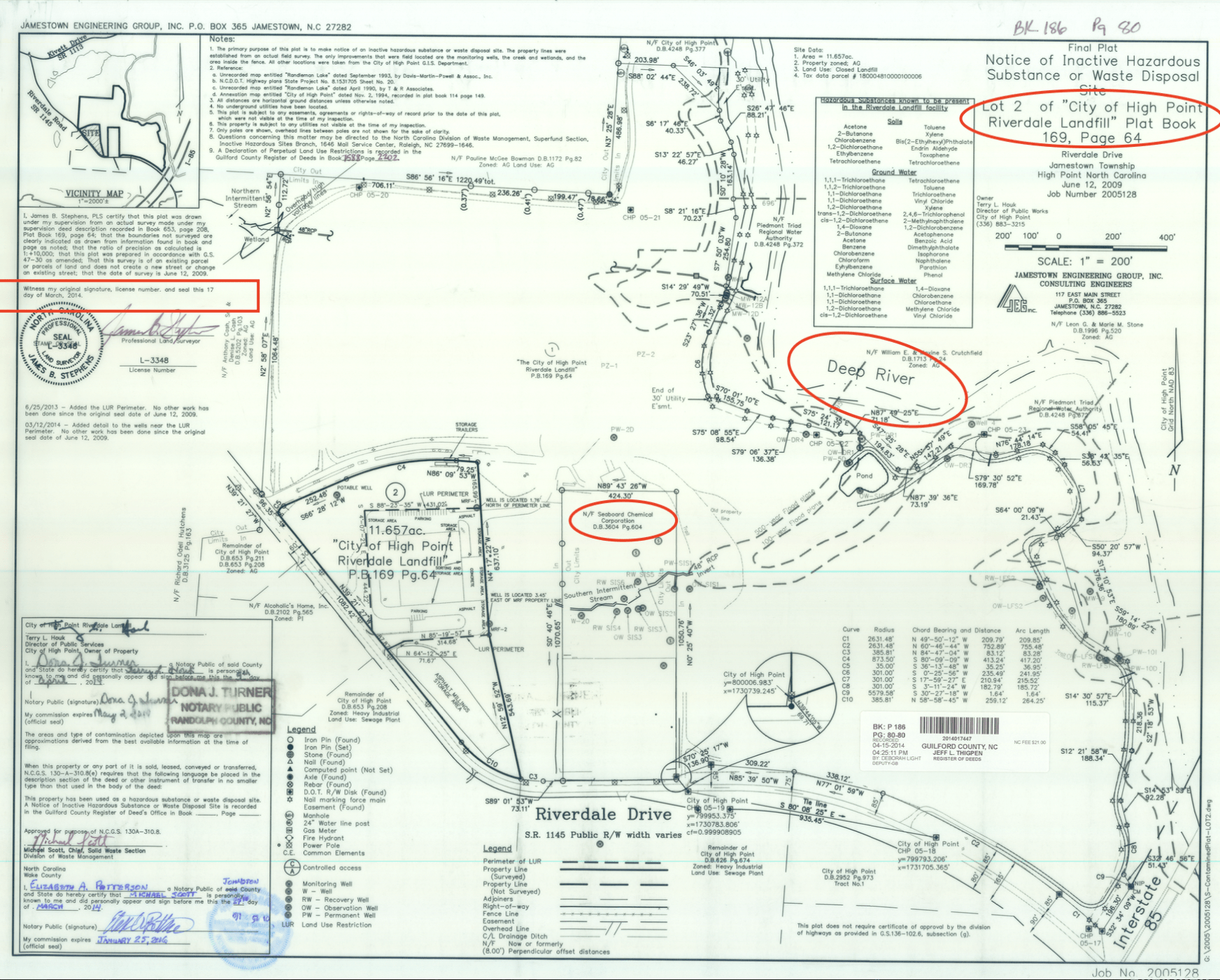
Read more: Seaboard/High Point’s 2023 Five-Year Report misses key point of 2008 Settlement AgreementThe 2023 five-year report on the Seaboard/High Point Landfill omits key elements of the 2008 remediation settlement and inaccurately suggests significant progress in cleanup efforts. Despite claims of containing contaminants, actual groundwater pollution levels remain above legal limits, and there are questions about monitoring well data collection.
-

Seaboard/HP Landfill’s 2008 Settlement & Trust Fund for CLEAN-UP
Read more: Seaboard/HP Landfill’s 2008 Settlement & Trust Fund for CLEAN-UPSeaboard Chemical Corporation was North Carolina’s largest hazardous waste processor until its bankruptcy in 1989, leading to its designation as a Superfund site in 1997. The City of High Point and multiple companies are responsible for remediation of the site, while a De Minimis Trust Fund manages settlement funds for clean-up costs.
-
High Point Landfill/Seaboard contamination: Voices from the past are more relevant than ever
Read more: High Point Landfill/Seaboard contamination: Voices from the past are more relevant than everIn May 2016, Taft Wireback reported on the Seaboard Chemical/High Point Landfill’s 27-year cleanup failure, emphasizing ongoing contamination issues affecting the Deep River drinking water supply. Nine years later, little progress has been made, as dangerous chemicals persist, prompting renewed calls from residents for urgent action to protect public health and the environment.
-

High levels of 1,4-DIOXANE continue to leach into Deep River from the 163-acre High Point Landfill (in addition to PFAS)
Read more: High levels of 1,4-DIOXANE continue to leach into Deep River from the 163-acre High Point Landfill (in addition to PFAS)Recent assessments reveal that a 110-acre contaminated site owned by the City of High Point but located in Jamestown (North Carolina) continues to pollute WOTUS water supply source Deep River via groundwater and runoff, with high levels of PFAS, VOCs and 1,4-dioxane. Citizens are bearing the burden of monitoring the water, and paying for the…
-

Cool fact about Colfax: Their 5-mile stretch of Deep River has the enforceable 303(d) status we’ve been seeking
Read more: Cool fact about Colfax: Their 5-mile stretch of Deep River has the enforceable 303(d) status we’ve been seekingIn Colfax, NC, a recent land purchase for a new school raises questions amid declining enrollment and existing nearby schools. Issues include inadequate EPA oversight and outdated regulations that may endanger local waterways and community health.
-

Are 1,4-Dioxane discharges moving from the EAST side of Guilford County to the Deep River/WEST side?
Read more: Are 1,4-Dioxane discharges moving from the EAST side of Guilford County to the Deep River/WEST side?At a March 2025 meeting, the NPDES permitting chief reported on North Carolina’s alarming 1,4 Dioxane contamination levels, particularly in the Piedmont Triad region, which have increased amid concerns over industrial pollution. Poor communication and lack of monitoring by local authorities have left residents uninformed about serious water quality issues.
-

More 1,4 Dioxane spikes & wastewater violations for
Read more: More 1,4 Dioxane spikes & wastewater violations forThe EPA objected to the renewal of Asheboro, North Carolina’s NPDES wastewater discharge permit renewal due to inadequate controls on the discharge of high levels of 1,4-Dioxane into drinking water supplies. Despite legal challenges from Asheboro and other cities to limit regulations, the EPA insists on strict limits to protect public health. Ongoing pollution issues…
Loading PurpleAir Widget…
Popular