-
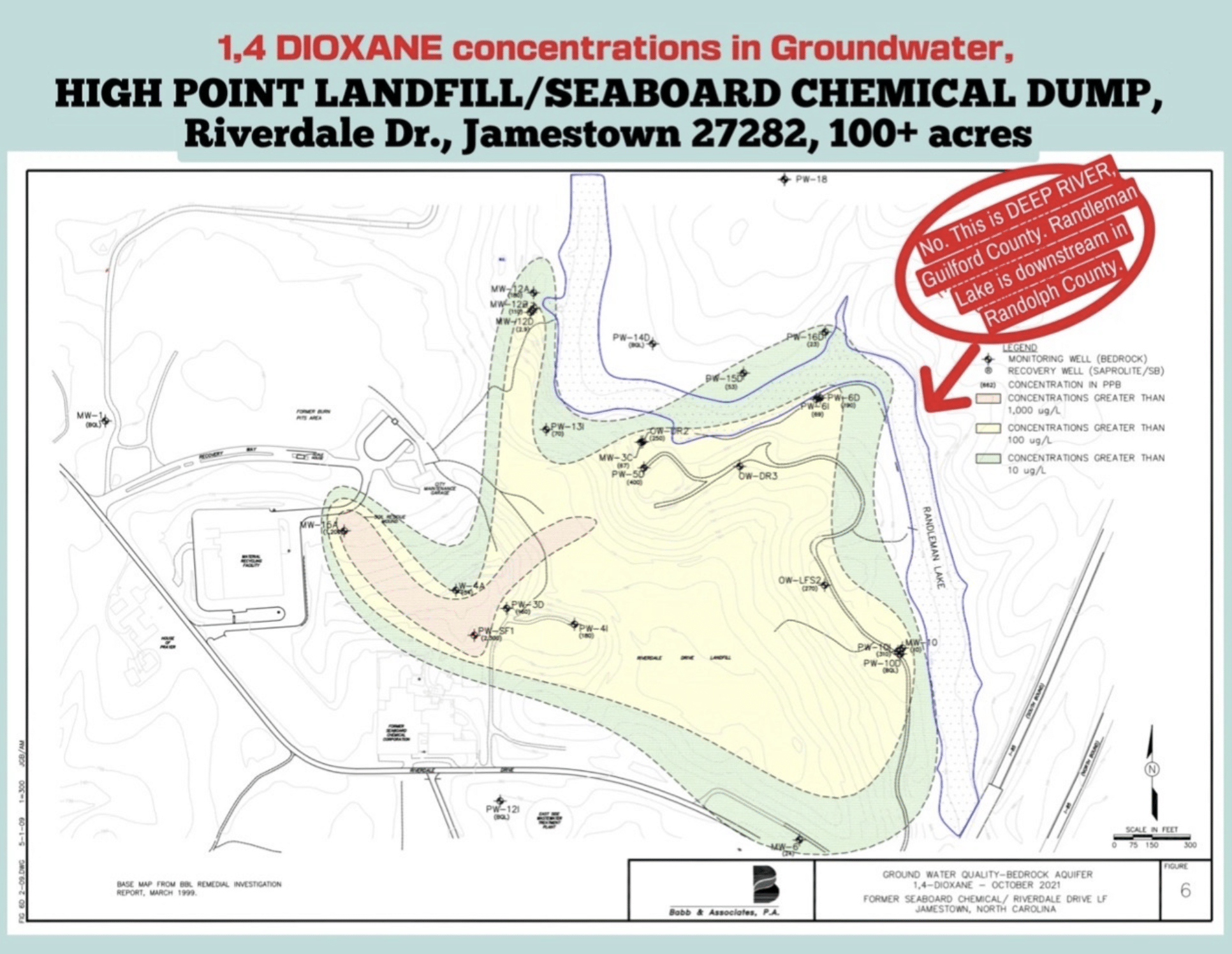
How High Point’s landfills & wastewater are contaminating DEEP RIVER
Read more: How High Point’s landfills & wastewater are contaminating DEEP RIVERIn the 1990s, the NC Division of Water Quality recorded extensive opposition to the Randleman Reservoir project due to water quality concerns, including hazardous pollution and high phosphorus levels from the Eastside Wastewater Treatment Plant in High Point, North Carolina. Despite initial objections and conditions for expansion, the situation worsened over time, reflecting inadequate oversight…
-

January 2025 Agreement between PTRWA & local governments amends 1987 drinking water contract; addresses PFAS claims
Read more: January 2025 Agreement between PTRWA & local governments amends 1987 drinking water contract; addresses PFAS claimsHigh Point and Piedmont Triad Regional Water Authority (“PTRWA”) submitted a four applications to the NCDEQ’s Division of Water Infrastructure, asking for $120,685,000 to treat the PFAS and 1,4 Dioxane contamination in Randleman Lake, drinking water supply for Jamestown, Randleman, Randolph County, Archdale and parts of Greensboro.
-

HIGH POINT EASTSIDE WWTP Water Violations; NPDES permit expired since 2018
Read more: HIGH POINT EASTSIDE WWTP Water Violations; NPDES permit expired since 2018In March 2023, residents submitted public comments on the Eastside Treatment Plant’s Air Emissions Permit. The permit was renewed in May 2023 for four years. An error in reporting pollutants resulted in significant increases in various toxic emissions. The plant also faced ongoing violations, fines, and noncompliance issues, highlighting major environmental concerns and public health…
-

UPDATE: Recent monitoring efforts at hazardous asphalt site were limited to 3 wells; NO groundwater or surface water tests were conducted
Read more: UPDATE: Recent monitoring efforts at hazardous asphalt site were limited to 3 wells; NO groundwater or surface water tests were conductedThe APAC Asphalt site in Jamestown, NC, is linked to significant water contamination issues, including TCE and other toxins flowing into the critical Copper Branch stream and the Deep River, which serves as a drinking water source. This calls for thorough water monitoring and adherence to water quality standards to protect public health and the…
-

PFAS water test results for Jamestown, High Point, Southwest Greensboro since 2022
Read more: PFAS water test results for Jamestown, High Point, Southwest Greensboro since 2022In January 2025, PFAS testing revealed levels continue to rise in Jamestown’s water supply, sourced from Randleman Lake. Public testing indicates serious contamination issues, with PFAS compounds remaining in water sources, which are also plagued with high levels of 1,4 Dioxane.
-

The 228-page ‘Regional Water and Wastewater Infrastructure Concept Plan’
Read more: The 228-page ‘Regional Water and Wastewater Infrastructure Concept Plan’The post highlights concerns about rising levels of water contamination in the upper Cape Fear/Deep River basin of Guilford and Randolph counties, North Carolina. Despite the serious pollution issues and risks to drinking water, local governments and state officials appear inactive while promoting industrial activities that are contributing to public health risks and environmental decline.
-

States still have the authority to hold polluters responsible for PFAS & chemical pollution in water supplies; EPA’s new guide tells how
Read more: States still have the authority to hold polluters responsible for PFAS & chemical pollution in water supplies; EPA’s new guide tells howThe EPA released a guide for states to prevent PFAS pollution, emphasizing their authority to control it at the source. The Southern Environmental Law Center has demonstrated using the Clean Water Act to hold polluters accountable. This guide aims to protect communities by requiring industries to manage their own PFAS emissions effectively.
Loading PurpleAir Widget…
Popular